A Little Off Topic

In my Holocaust & Genocide Studies class today we talked about the victims of the Holocaust, we only grazed the surface of the Kindertransports and of the Winton transports in particular but, I would like to go more in depth to these transports, the children saved, and the admirable heroes behind their success.


Kindertransports

– the informal name of a series of rescue efforts which brought thousands of refugee Jewish children to Great Britain from Nazi Germany between 1938 and 1940.

After the injustice of Kristallnacht, Britain eased their immigration restrictions allowing children under the age of 17 to enter into their country from Germany and Germany-annexed territories. Popular British opinion and several committees were what ultimately encouraged Britain’s decision but they did have to guarantee payment for each child’s care, education, and eventually for their emigration from Great Britain. The children were allowed in unaccompanied and on temporary travel visas. “It was understood at the time that when the “crisis was over,” the children would return to their families. Parents or guardians could not accompany the children. The few infants included in the program were cared for by other children on their transport. (Kindertransport Article)

features_kindertransport1

On the journey to Britain, children traveled by train to ports in Belgium and the Netherlands, from there they sailed to Harwich. Children with sponsors then would go to London where they would meet their foster families. Children without sponsors would go to a summer camp and other facilities until individual families could be found for them. The Kindertransports altogether saved over 9,000 children of which, 7,500 were Jewish.

Source: http://www.ushmm.org/wlc/en/article.php?ModuleId=10005260

Winton Transports

– A stockbroker by profession, Nicholas Winton organized a rescue operation that brought about 669 children, mostly Jewish, from Czechoslovakia to Great Britain.

Winton immediately established a Children’s Section after witnessing Jewish refugee camps and realizing that soon Germany would control much more territory, used the name of the British Committee for Refugees from Czechoslovakia, initially without authorization, and began taking applications from parents at his hotel in Prague. As his operation expanded, he opened an office in central Prague. Soon, thousands of parents lined up outside of Winton’s Children Section’s office seeking a safe haven for their children. (Winton Article)

8893_1

“Winton returned to London to organize the rescue operation on that end. He raised money to fund the transports of the children and the 50 pound per child guarantee demanded by the British government to fund the children’s eventual departure from Britain. He also had to find British families willing to care for the refugee children. By day, Winton worked at his regular job on the Stock Exchange, and then devoted late afternoons and evenings to his rescue efforts. He made a great effort to raise money and find foster homes to bring as many children as possible to safety.

The total number of children rescued through Winton’s efforts is not yet certain. According to a scrapbook he kept, 664 children came to Great Britain on transports that he organized. In the research compiled for the documentary “The Power of Good: Nicholas Winton,” aired on Czech television in 2002, researchers identified five additional persons who entered Britain on a Winton-financed transport, bringing the official number to 669 children. The available information indicates that some children who were rescued have not yet been identified.

After the war, Nicholas Winton’s rescue efforts remained virtually unknown. It was not until 1988, when his wife Grete found a scrapbook from 1939 with all the children’s photos and a complete list of names of those rescued that Winton’s rescue efforts became known. Winton since received a letter of thanks from the late Ezer Weizman, former president of the State of Israel, and was made an honorary citizen of Prague in the independent Czech Republic. In 2002, Winton received a knighthood from Queen Elizabeth II for his services to humanity. (Winton Article)”


I apologize for my absence on my blog during the Holiday seasons but I would like to jump right back in. During my break I watched countless episodes of “Hunting Hitler” which plays on the History Channel and even though I am skeptical of what I hear and see on TV, this show is intriguing.


The idea that Hitler did not die in his bunker and that he escaped Germany through an intricate maze of tunnels is an interesting thought, and one I share with Bob Baer and John Cencich. I believe that although Hitler was a man of great power, he was a coward and that his cowardly ways would not allow him to die like that. He strongly believed in the Nazi ideology and I do not see him giving into the termination of the Nazi party and ideology that easily. It was cowardly to “commit suicide in a bunker” but more cowardly to run away and he has always been cowardly if nothing else. I would highly recommend watching this show as I have thoroughly enjoyed it and the ideas that it poses, I have linked the show below if you would like to watch it.


244.jpg

Hunting Hitler


“In 2009, three US professors with access to Adolf Hitler’s alleged remains startled the world with scientific DNA proof that the skull and bones that Russia had claimed since the end of World War II were Hitler’s actually belonged to a middle-aged woman whose identity remains unknown. This announcement has rekindled interest in the claim made by Joseph Stalin, maintained to the end of his life, that Hitler got away. The truth is that no one saw Hitler and Eva Braun die in the bunker in Berlin on April 30, 1945. No photographs were taken to document claims Hitler and Evan Braun committed suicide. Hitler’s body was never recovered. No definitive physical evidence exists proving Hitler died in the bunker in Berlin.

Dr. Jerome Corsi explores the historical possibility that Hitler escaped Nazi Germany at the end of World War II. FBI and CIA records maintained at the National Archives indicate that the US government took seriously reports at the end of World War II that Hitler had escaped to Argentina. More recent evidence suggests Hitler may have fled to Indonesia, where he married and worked at a hospital in Sumbawa. Even the chief of the US trial counsel at Nuremburg, Thomas J. Dodd, was quoted as saying, �No one for sure can say Adolf Hitler is dead.”

Putting massive amounts of evidence and research under a critical eye, Dr. Corsi shows that perhaps modern history’s most tantalizing question has yet to be definitively answered: Did Hitler escaped Nazi Germany at the end of World War II to plot revenge and to plan the rise of the Fourth Reich?”

– Hunting Hitler: New Scientific Evidence That Hitler Escaped Nazi Germany


Movie Recommendation of the Week

Defiance

We watched this movie a few weeks ago in class and even though it is historically accurate and rich in facts it is still very entertaining and interesting. The story of the Bielski brothers is a story of the Jewish Partisans, a side of the story we rarely see. I highly recommend this movie.

Defiance Rating: 8.5/10

“In 1941, Hitler began the systematic slaughter of Poland’s Jewish citizens. But brothers Tuvia and Zus Bielski refused to submit to that fate. When their village is sacked and their parents murdered by Polish police working for the Nazis, the brothers gather their two younger siblings and hide in the nearby Belorussian forest. From that leafy shelter they plot to strike back against their enemies—a story of defiance based on real events.

Tuvia tracks down and executes his parents’ killers, then realizes he has no taste for revenge. His true passion lies in somehow saving the other Jews crying out for protection. Soon he dedicates himself to the growing number of refugees who find their way to the Bielskis’ wooded hideaway.

Zus is all for saving lives. But he grows impatient with his older brother’s penchant for placing others’ needs above their own and soon heads off to join a band of heavily armed Russian partisans.

Tuvia, for his part, remains convinced that if the struggling Jews are to survive, they must endure. Fighting when they must. Hiding when they can. But always clinging to the things that give them hope. “We may be hunted like animals, ” he says. “But we will not become animals.”

His resolve—and that of all the Jewish refugees in his care—will be severely tested.”

Source: http://www.pluggedin.com/movie-reviews/defiance

ww

Bielski Brothers Original Picture

defiance-20090601010052919-000

“Defiance” Bielski Brothers taking picture


“If we should die trying to live, at least we die like human beings.”

-Tuvia Bielski


Something To Think About: Answered

“Was the FDR administration’s response correct for total war, or should he have done more to save those doomed by the Nazis?”

My Opinion: FDR made the correct response as he was doing what he could do given the situation as it was foreign affairs. I do believe however that he could of allowed the U.S. to join sooner, eliminating the occurrence of Pearl Harbor’s attack and the bombings of Hiroshima and Nagasaki. His response was correct in the way that he decided to enact total war, by his decision to do this, he inadvertently saved many Jewish lives but if FDR had decided to join sooner the U.S. could have saved so many more just by winning the war.

Classmate Opinion: I believe that FDR could have saved more Jewish lives if he had went into the war earlier, also I think that the excuse of the U.S. not having enough troops is just that, an excuse. Also, if the people of the U.S. were more believing of the stories they had been told of the Holocaust then I think they would have been more willing to go into the war earlier.


“Is it reasonable to assume that FDR could have done more to save the Jews of Europe?”

My Opinion: Of course FDR could have done more to save the Jews but I also understand why he did what he did. The political climate wasn’t right but also he wanted to remain neutral for as long as he possibly could. Once his wife and the general public influenced his opinion he got involved but if they hadn’t he most likely would of remained neutral until Pearl Harbor was attacked. He could of done more to save them, but at the same time he didn’t want to.

Classmate Opinion: I agree with you, he could of done more but I understand why he didn’t. But also, a part of me is torn with the fact that he knew the cruelty that they were going through and he allowed it to happen.

poc_dr._seuss_1

“In international affairs, Smith often provides excuses for Roosevelt’s actions – or blames mistakes on others.”

-The Baltimore Sun

Source:http://articles.baltimoresun.com/2007-05-20/news/0705180118_1_jean-edward-smith-roosevelt-fdr

Something to Think About

Recently, my Holocaust and Genocide studies teacher posed two questions and while our class had a lengthy discussion on both, I would now like to ask you:

“Was the FDR administration’s response correct for total war, or should he have done more to save those doomed by the Nazis?”

and

“Is it reasonable to assume that FDR could have done more to save the Jews of Europe?”

I will make a post soon discussing both and my viewpoint on each as I further my research on each subject to make an educated response.


1000509261001_1628429998001_BIO-Biography-13-World-Leaders-Franklin-D-Roosevelt-SF

“The only thing we have to fear, is fear itself.”

-Franklin D. Roosevelt

Too Little Too Late

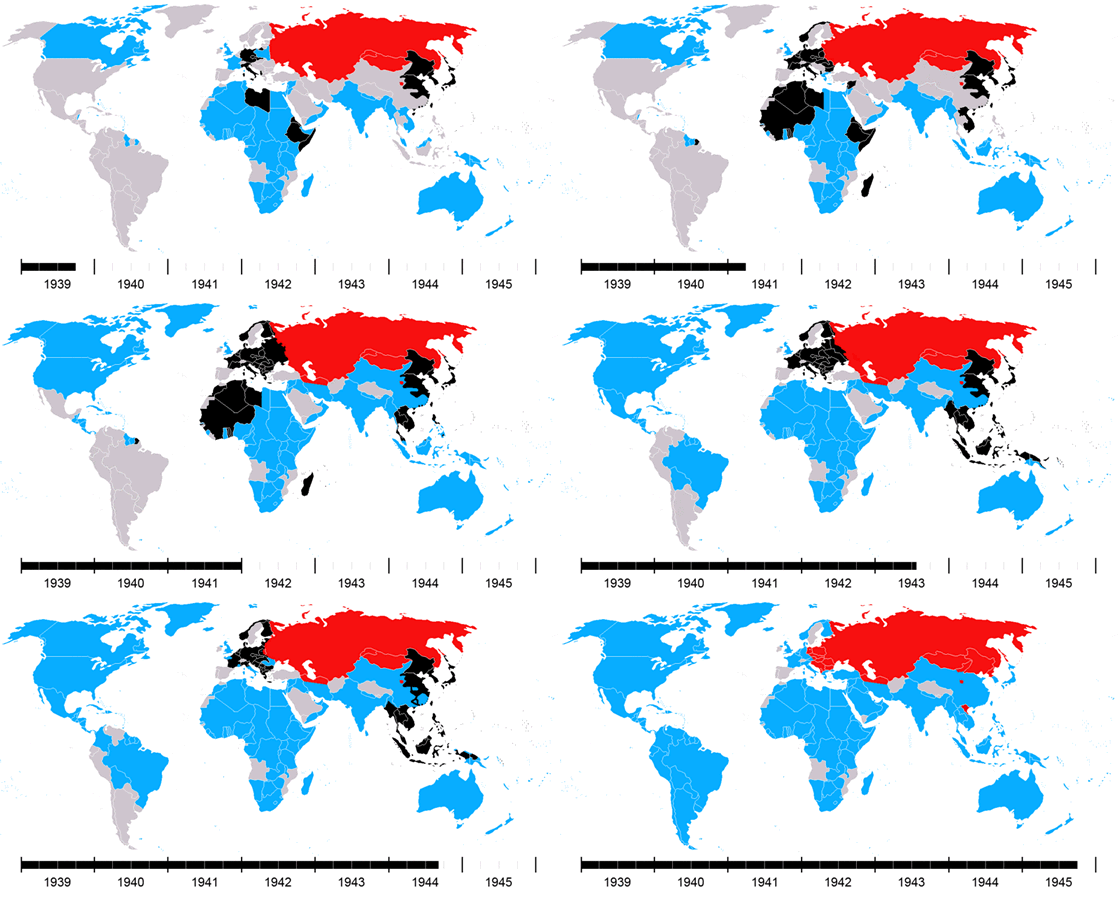
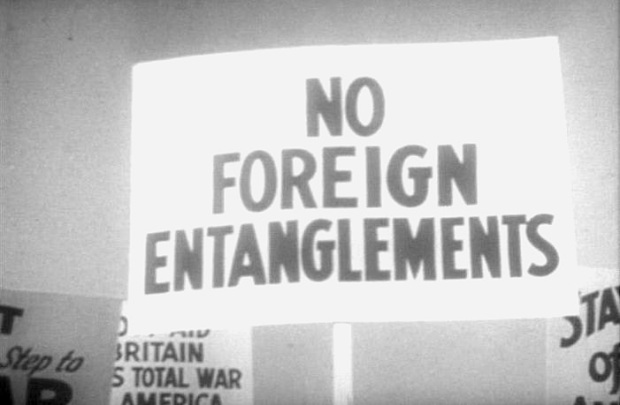
So you already know from previous posts, that the U.S. did not join the war until 1941 and that we didn’t join because of Jewish persecution but rather we joined for political reasons. Economical reasons. The U.S. still continued their business with Germany after the war started and did not stop trade with Germany until we were at war. Hitler came to power in 1933, so who else joined for the wrong reasons and joined too little too late? 

allied-and-axis-powers-during-world-war-2

Norway, Denmark, Netherlands, Belgium, and Luxemburg joined the war after they were invaded by Germany in 1940 but Greece, Yugoslavia, the United States, China, and Brazil didn’t join until 1941-1942. Why did these few countries join the war effort so late? (I am skipping over the U.S. in this post because it is the majority of my blog and has been covered)


Greece 

Greece entered World War II on 28 October 1940, when the Italian army invaded from Albania, beginning the Greco-Italian War. The Greekarmy was able to halt the invasion temporarily and was able to push the Italians back into Albania. The Greek successes forced Nazi Germany to intervene.
Read more  – https://en.wikipedia.org/wiki/Military_history_of_Greece_during_World_War_II


Yugoslavia

The invasion of Yugoslavia, also known as the April War, was a German-led attack on the Kingdom of Yugoslavia by the Axis powers which began on 6 April 1941. 
Read more – https://en.wikipedia.org/wiki/Invasion_of_Yugoslavia and http://www.ww2f.com/topic/14673-yugoslavia-in-world-war-ii-1941-45/


China

When Japan invaded China the Communists under Moa were in a Civil War with the Nationalists under Chiang Kai-shek who believed in democracy and was in power. With the attack they decided to put their differences behind each other for a bit and try to drive out the Japanese.
Read more – http://historum.com/asian-history/881-china-s-role-wwii.html


Brazil 

Brazil’s participation in World War II was the culmination of a foreign policy emphasis that began in 1902. That year, Foreign Minister Rio Branco set Brazil on a course of close relations with the United States. He believed that ties with the United States, a growing world power, would promote Brazil’s aims at leadership in the Latin American region and provide international prestige.
Read more – http://classroom.synonym.com/brazilian-involvement-wwii-12185.html


Also, check out this blog for information on Allied trading during the war and I will make a post summarizing it soon!

https://harmoniaphilosophica.wordpress.com/2011/01/11/allies-trading-with-hitler-economic-2jszrulazj6wq-22/


Noentanglements

“Domestic policy can only defeat us; foreign policy can kill us.”

-John F. Kennedy

What Countries Were Involved in World War 2?

A few informational facts:

  • World War II started in September 1, 1939 and ended September 2, 1945
  • Allies consisted of Joseph Stalin,  Franklin D. Roosevelt, Winston Churchill, Chiang Kai-shek, Charles de Gaulle
  • Axis consisted of Adolf Hitler, Hirohito, Benito Mussolini
  • Allies Casualties: Over 60 million dead
  • Axis Casualties: Over 12 million dead
  • The results of WWII were the end of German Third Reich,
    United States And Russia Become Global superpowers, and
    Founding on the United Nations

 Want more information?
http://www.historynet.com/world-war-ii

Axis Powers

Germany – 1939

Austria – 1939
Slovakia – 1939
Italy – 1940
Bulgaria – 1941
Hungary – 1941
Romania – 1941
Croatia – 1941
Iraq – 1941
Finland – 1941
Japan – 1941
Korea – 1941
Thailand – 1942

Allied Powers

Poland – 1939

United Kingdom – 1939
Imperial Possessions – 1939
Australia – 1939
New Zealand – 1939
France – 1939
Canada – 1939
South Africa – 1939
Newfoundland – 1939
Nepal – 1939
Czech Government (in exile) – 1939
Norway (after invasion) – 1940
Denmark (after invasion) – 1940
Netherlands (after invasion) – 1940
Belgium (after invasion) – 1940
Luxemburg (after invasion) – 1940
Greece – 1940
Yugoslavia – 1941
United States – 1941
China – 1941
Brazil – 1942

484112

“As long as there are sovereign nations possessing great power, war is inevitable”

-Albert Einstein

Movie Recommendation of the Week

The Book Thief

Death as the narrator, a daring yet fitting choice considering the circumstances in this movie. Based off of The Book Thief, this movie was brilliantly directed by Brian Percival and received various awards including the Kathleen Mitchell Award, National Jewish Book Reward for children’s and young adult literature, and Book Sense of the Year (links to award descriptions below.) From Liesel to Rudy to Max, this story is shocking but definitely one of the best movies I have seen in awhile and I highly recommend watching this interesting perspective of a German girl stuck in the middle of the Holocaust.

The Book Thief Rating: 10/10

Kathleen Mitchell Award
http://www.literaryfestivals.com.au/awards/kathleen_mitchell_award_for_young_writers.html
National Jewish Book Award
http://www.jewishbookcouncil.org/awards/national-jewish-book-award.html
Book Sense Award
http://www.goodreads.com/award/show/290-book-sense-book-of-the-year-award

“If you go to a bookstore looking for Markus Zusak’s novel, the movie’s source, you’re likely be directed to the Young Adult or Teen Fiction sections, which explains a lot about the movie’s appeal, and lack thereof. Like a kid-friendly mulch of elements cribbed from “The Diary of Anne Frank” and “Slaughterhouse-Five,” the film conceivably could play well to an audience of 12-year-olds and their grandparents. Other adults, though, are more apt to find the proceedings an occasion for fits of squirming and eye-rolling.

This is the movie, after all, that’s narrated by Death, a device that you can imagine possibly working in a Hollywood film of the ’30s or ’40s, but hardly since. What’s the Grim Reaper doing here, besides nudging along the exposition and dropping ironic bon mots? Obviously, he serves a purpose much akin to that of the movie’s impeccably costumed but barely differentiated Nazis: to attempt giving some thematic ballast to a tale so wispy and ungrounded that otherwise it might float away.

The center of that fiction is Liesel (Sophie Nelisse), one of those spunky young heroines that keep the Young Adult industry afloat. When Death first introduces her, in 1938, she is on the run with a fugitive mother and a little brother who dies in the first scene. Soon after, Mom vanishes over the horizon and Liesel is taken in by a good-hearted provincial couple, kindly Hans (Geoffrey Rush) and crusty-but-lovable Rosa (Emily Watson). Was the girl’s mom, as is hinted, a communist? Why would this couple, who barely have enough to eat, take in an unknown child to care for? Such are the questions the movie ignores as it gallops along to history’s accelerating drumbeat.

Here’s another: How is it that Liesel, mocked by her new schoolmates for being illiterate, quickly morphs not just into a reader but one so adept and voracious that she’s soon swiping books from the local burgermeister’s library? (This valorization of reading is a transparent come-on in many books aimed at young readers.) Whatever its source, her newfound passion is one she shares with Max (Ben Schnetzer), a young Jewish guy the kindly couple hide in their basement. And of course, the Nazis hate books, as they demonstrate by burning a heap in the town square.

Our heroine’s bookishness, meanwhile, is mainly a source of bemusement to Rudy (Nico Liersh), the flaxen-haired neighbor boy who befriends and dotes on her. In a different, more reality-based movie, their relationship would be a coming-of-age romance. But though the characters here age from 13 to 17 during the story, at the end they look exactly like the barely pubescent kids they were when it started, and the troubling excitements of eros never arise.

That ostensibly strange fact is perhaps explained less by the obvious constraints of filming the same actors in a short production schedule than by the have-your-cake-and-eat-it-too logic that guides so many fantasy narratives. In this realm, people supposedly grow up, yet at the same time remain magically innocent and unchanged. Likewise, history: the mean old Nazis hound Max and march sad-looking Jews down the street, but we never see what happens to those Jews—they remain vaguely wistful images divorced from the cruel reality of their corporeal fates.”

Source: http://www.rogerebert.com/reviews/the-book-thief-2013


tumblr_n8cwldjWFq1r5usojo1_500

“I am haunted by humans.”

-Death in Markus Zusak’s The Book Thief

In depth to “why did the U.S. not do more?”

I know in the last post I hastily addressed this question but now I want to dive deeper. Why did we wish to remain neutral? Just trying to avoid war is not the only reason. In my research I have discovered that the majority of Americans who remembered World War 1 considered our entry a major mistake and many didn’t want to re-live WWI. In the beginning of WWII, it started to look ever increasingly similar to WWI with Hitlers invasion of Poland, and this only strengthened Americans objections. So beyond U.S. citizens opposing the war, what else was it? Politically, the U.S. didn’t move towards joining the war until France surrendered after Hitlers advances (and theoretically Hitler could of spread his grasp throughout Europe if he had not hesitated in his invasion of Britain.) At this point, Hitler was becoming too great of a threat (in the eyes of the U.S. government) and once France surrendered, Hitler became more of a “worldly” problem instead of just a European one. There was also a strong opinion held by Joseph P. Kennedy (Great Britain Ambassador) that understood that Britain would be too weak after pressure from Hitler that with the joining of the U.S., the Allies would lose the war, and also, many Americans were hesitant in joining because the U.S. had never won a foreign war (except for Mexico in 1848 but that was basically a civil war,) so what would be different? I have learned through various history classes, historical books, and websites over the past few months of the Holocaust and of America’s history involving the Holocaust. I have found that the U.S. didn’t join the war solely based on citizens opinions and the surrendering of France but rather, we joined because of Japan’s unreasonable demands wanting the U.S. to re- instate oil sales and wanting us to drop support of the Philippines and China, and Germany was already attacking the U.S. before Pearl Harbor was even attacked. Germans were sinking U.S. merchant ships taking supplies to England and German submarines were targeting U.S. war ships. The U.S. also joined because it was a popular belief that WWII would help give the final shove to get the U.S. out of the depression that they were still in at the time. Also, Japan had already attacked China, and Germany had already attacked Britain and Russia so who was to say the Axis powers wouldn’t come after the U.S.?


I have found a very interesting article (just meant to show a different viewpoint on WWII) that I will link below.

http://northerntruthseeker.blogspot.com/2011/02/more-real-history-revealed-real-reason.html?_sm_au_=iVVq7j1WVZjJD8fq

10515cs

World-War-2-Cartoons-Punch-1939-04-12-401

“Today we may say aloud before an awe-struck world: “We are still masters of our fate. We are still captain of our souls.”

Winston Churchill

Sources:
https://www.quora.com/In-WWII-why-didnt-the-U-S-join-Britain-and-France-earlier-when-they-declared-war-on-Germany-for-invading-Poland

Did the U.S. do the most they could?

If they had done the best of their ability, Hitler (and the Nazi party) never would of gotten as far as they did. This widely asked question concerning U.S. forces during the Holocaust has been discussed by many, it will now also be discussed by me. We “did everything in our power” to stop Hitler,  there is undeniable proof that the U.S. was turning a blind eye on the happenings in Germany. President Roosevelt didn’t acknowledge the mass genocide or even Hitler doings politically, until pressured by the public, even though he already had a meeting with a Jan Karski previously where Karski revealed EVERYTHING that Hitler was doing and planning. Roosevelt responded with “But how are the horses treated?” Knowing what Hitler was planning with the expansion of the Nazi Party and the growth of Germany’s land, Roosevelt still chose to ignore Hitlers political augmentation. The U.S. didn’t even get directly involved until Pearl Harbor was attacked! So did the U.S. do the most they could? No. So why didn’t we? The U.S. wanted to remain neutral for as long as possible, to try and avoid war but war was inevitable, if we hadn’t of acted when we did Hitler would have became a HUGE political and economical threat to the U.S. Hitler, if allowed to grow further, would have taken over multiple important countries eventually, controlling their imports and exports and who does that effect? That’s right every country that has yet to be taken overs economy, including the U.S. Hitler was aiming to dictate the entire world if allowed, Germany and the surrounding countries was just the beginning.  Hitler was a dictator and wanted everybody below himself, Democracy would have fallen as well as every other government around the world. The fallen countries politics and economies would have been controlled by Hitler leaving him over control of all remaining countries. The U.S. should have stomped out Hitler before he even became an issue. Gratefully, Hitler was not able to become a world padrone, but we still should have stepped in sooner before there even became another World War. We could of stopped the problem before it even became a problem.


augmentation- the action or process of making or becoming greater in size or amount.
padrone- padron or master, in particular.


Hitler Cartoon

“Those who cannot remember the past are condemned to repeat it.”

-George Santayana

Sources:
https://www.jewishvirtuallibrary.org/jsource/Holocaust/worldres.html
Mrs. Rogers Holocaust and Genocide Studies Honors Class